Improving Screening Productivity: 5 Solutions for the Most Common Screening Problems
Efficient screening or particle size separation is essential to maintaining productivity, maximizing product quality and reducing operating costs. When vibrating screens are operating at peak performance, material is properly separated, throughput remains consistent and screen components experiences less wear. However, even well-designed screening systems can experience challenges that reduce efficiency and create costly downtime.
Problems such as plugging, blinding, uneven material distribution and excessive equipment wear are among the most common issues operators encounter. Fortunately, many of these challenges can be addressed through adjustments to screen media, operating parameters and maintenance practices.
Below are five practical solutions that can help improve screening productivity and keep your operation running efficiently.
1. Match Screen Media to the Application
The foundation of an efficient screening process begins with selecting the right screen media.
Different materials place different demands on screening equipment. Factors such as particle size, material shape, moisture content and abrasiveness all influence media performance. Choosing media that is not suited to the application can result in reduced efficiency, plugging, excessive wear and frequent replacements.
For most applications, woven wire media provides excellent open area and throughput. However, operations processing abrasive material or experiencing excessive wear may benefit from rubber or polyurethane media.
When screening performance declines, evaluating screen media selection should be one of the first troubleshooting steps.

2. Optimize Screen Speed and Stroke
Even the best screen media cannot perform effectively if the screen is operating at the wrong settings.
Screen speed and stroke directly impact stratification, particle travel and material separation. Excessive speed can cause particles to bounce across the deck, reducing the opportunity for material to pass through the openings. Running too slowly can lead to material buildup, reduced capacity and poor screening efficiency.
Similarly, insufficient stroke may contribute to plugging because near-size particles do not receive enough energy to clear the openings. In some applications, increasing stroke can help improve material movement and reduce plugging.
Finding the optimal balance between speed and stroke helps maximize efficiency while minimizing unnecessary stress on equipment components.
3. Address Plugging and Blinding Before They Impact Production
Plugging and blinding are two of the most common causes of screening inefficiency.
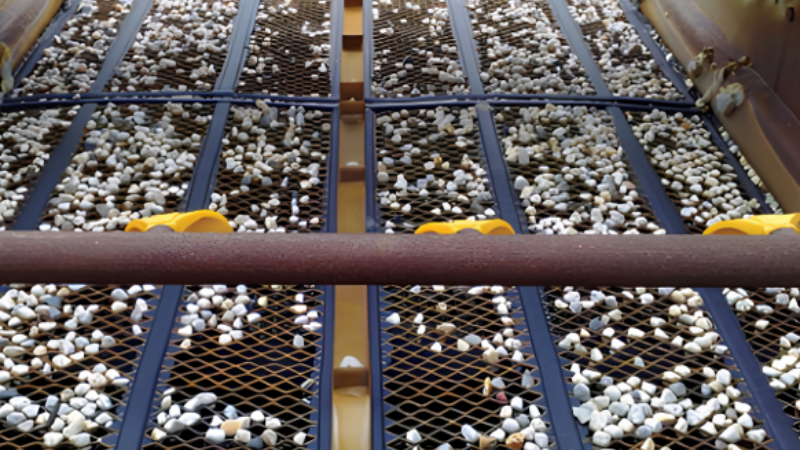
Plugging occurs when near-size particles become lodged in screen openings, reducing available open area. Blinding occurs when fine material, often combined with moisture, accumulates on the screen surface and blocks material passage.
If left unresolved, both conditions can dramatically reduce throughput and screening accuracy.
Several solutions can help mitigate these issues:
- Increase stroke to provide additional energy for particle movement.
- Use more flexible screen media to help release trapped material.
- Reduce moisture when possible.
Addressing plugging and blinding early can prevent productivity losses and eliminate unnecessary downtime.
4. Improve Feed Distribution Across the Screen Deck
Screening efficiency depends heavily on how material enters the screen.
When feed is concentrated on one side of the deck, portions of the screen become overloaded while other areas remain underutilized. This uneven loading limits the effective screening area and increases the likelihood of pegging, blinding and premature wear.
In addition to reducing efficiency, poor feed distribution can place excessive stress on support components such as springs, side plates and structural members.
To improve productivity:
- Maintain consistent feed rates.
- Ensure material is evenly spread across the screen width.
- Evaluate feed chute design and discharge points.
- Monitor loading patterns during operation and make adjustments as necessary.
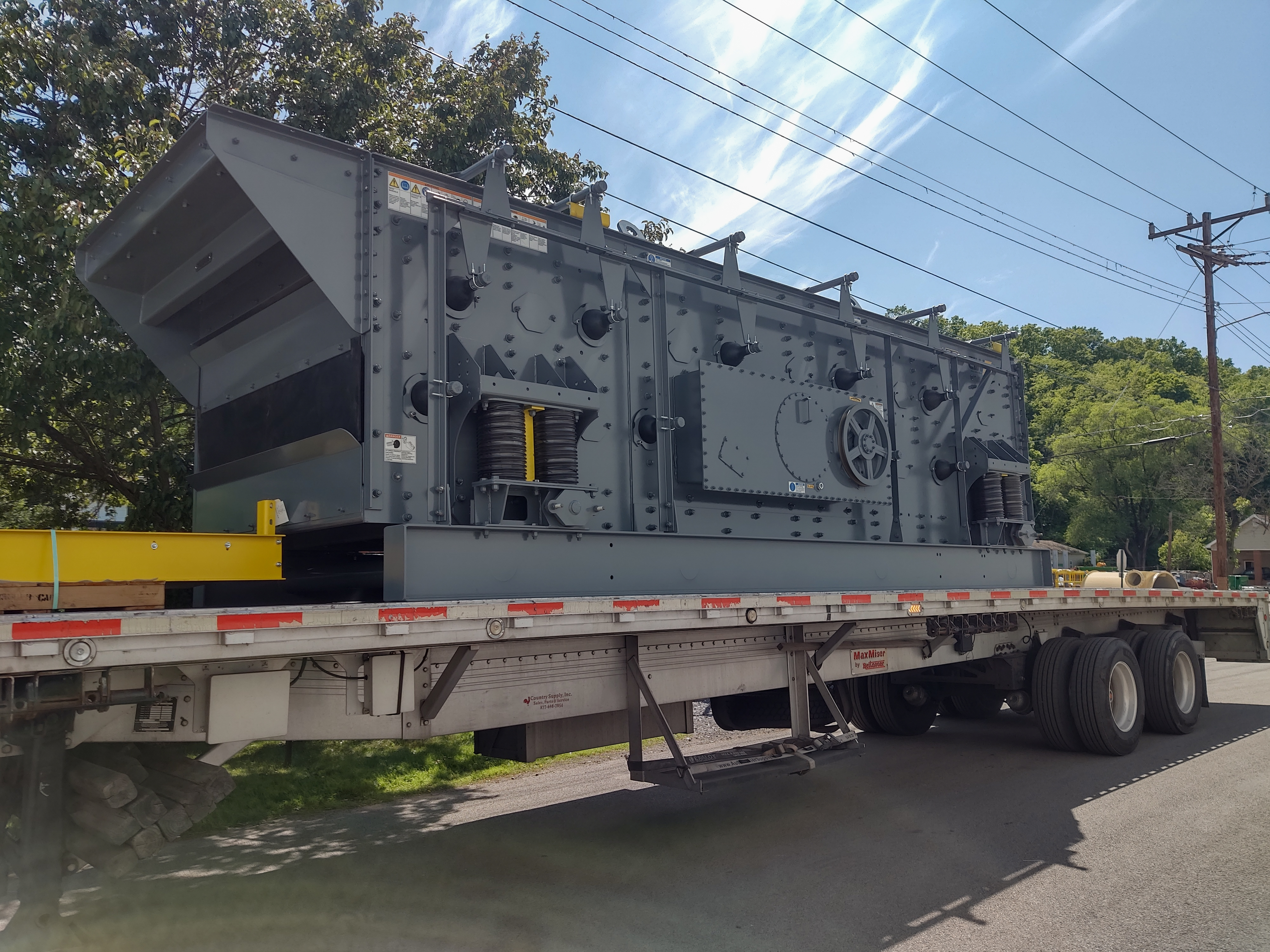
Even feed distribution allows operators to maximize the available screening area and improve overall performance. For example, when feeding a 6’ (1.8 m) wide vibrating screen with a 24” (600 mm) wide conveyor belt, the screen’s feed chute typically needs baffles to spread material evenly across a 6’ wide surface.
5. Establish a Proactive Maintenance Program
Many screening problems can be prevented through routine inspection and maintenance.
Small issues such as loose hardware, worn media, damaged panels or material buildup can quickly develop into larger problems that affect capacity and product quality. In many cases, productivity losses occur gradually, making them difficult to detect until performance has significantly declined.
A proactive maintenance strategy should include:
- Regular inspection of screen media for wear, tears and damaged openings.
- Cleaning screen decks to prevent material buildup.
- Monitoring vibration performance and operating parameters.
- Inspecting springs, bearings and structural components.
- Tracking wear patterns and maintaining replacement schedules.
By identifying issues early, operators can reduce unplanned downtime, extend equipment life, and maintain consistent screening performance.
Maximizing Screening Performance
Screening productivity is rarely determined by a single factor. Instead, it is the result of proper media selection, optimized operating conditions, effective material flow and consistent maintenance practices.
When common problems such as plugging, blinding, uneven feed distribution and improper operating settings are addressed proactively, operations can achieve higher throughput, improve product quality and lower overall operating costs.
By focusing on these five key areas, producers can turn common screening challenges into opportunities for greater efficiency and long-term plant performance.