The Secret to Perfect Sand: The Role of Sand Classifiers
When it comes to sand classification, there is a variety of equipment that can get the job done. From Sand Classifying Tanks to Fine Material Washers, sand classifiers are an essential step in achieving the perfect, in-spec sand.
What Are The Types of Sand Classifiers?
The purpose of sand classifying equipment is to separate material based on size and density. Types of sand classifying equipment can include Classifying Tanks, Fine Material Washers and sand plants, such as EIW’s Falcon Sand Plant.
Classifying Tanks
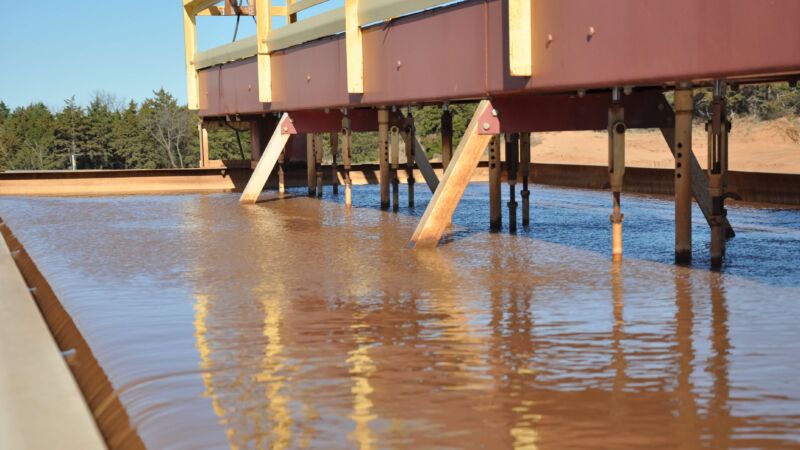
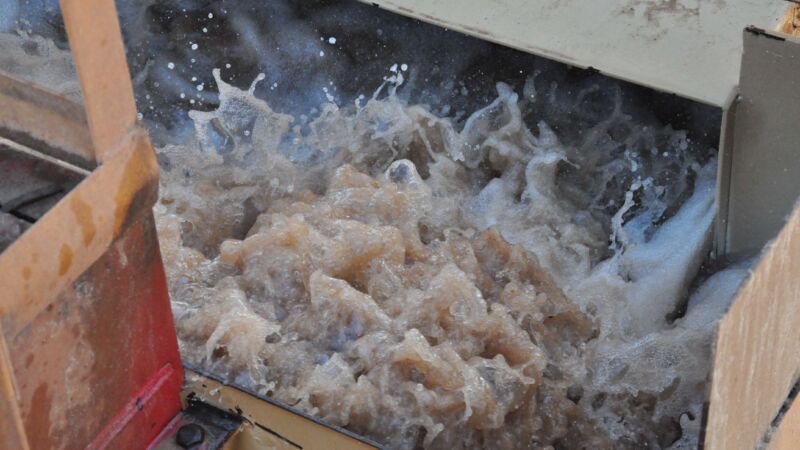
Classifying Tanks are used for washing and classifying sand while removing silts to create an in-spec product. Classifying Tanks can make multiple products from a single feed and scalp off excess water in suction dredging operations. They handle large material volumes, creating construction grade sand that stays within required product specifications.
Classifying Tanks effectively draw out excess water from incoming feed material in operations such as dredging, pumping and high silt processing. They stabilize feed fluctuations and remove surplus sand particles to ensure a steady, specification compliant output. Engineered for both slurry and dry inputs, these low maintenance systems manage changes in gradation while reducing waste. Available in stationary, semi portable and portable models, Classifying Tanks are simple, highly-customizable pieces of sand classifying equipment.
Classifying Tanks are built with six to 11 valve stations, depending on the size of the tank. Each station is equipped with a paddle sensor and a set of valves controlled by hydraulic cylinders mounted within a bridge that extends across the tank’s length. As the sand mixture enters the system, the larger, heavier particles settle in the primary stations, while finer particles move downstream and settle in the later ones. As material accumulates in a station, it stops the paddle sensor, prompting the PLC to open that station’s valves based on the stall motor signal. The released sand then drops into two, three or four collecting‑and‑blending flumes located beneath the tank. These flumes recombine coarse and fine sand fractions according to PLC instructions from each valve, directing the blended material to the dewatering equipment positioned under the Classifying Tank.

Fine Material Washers
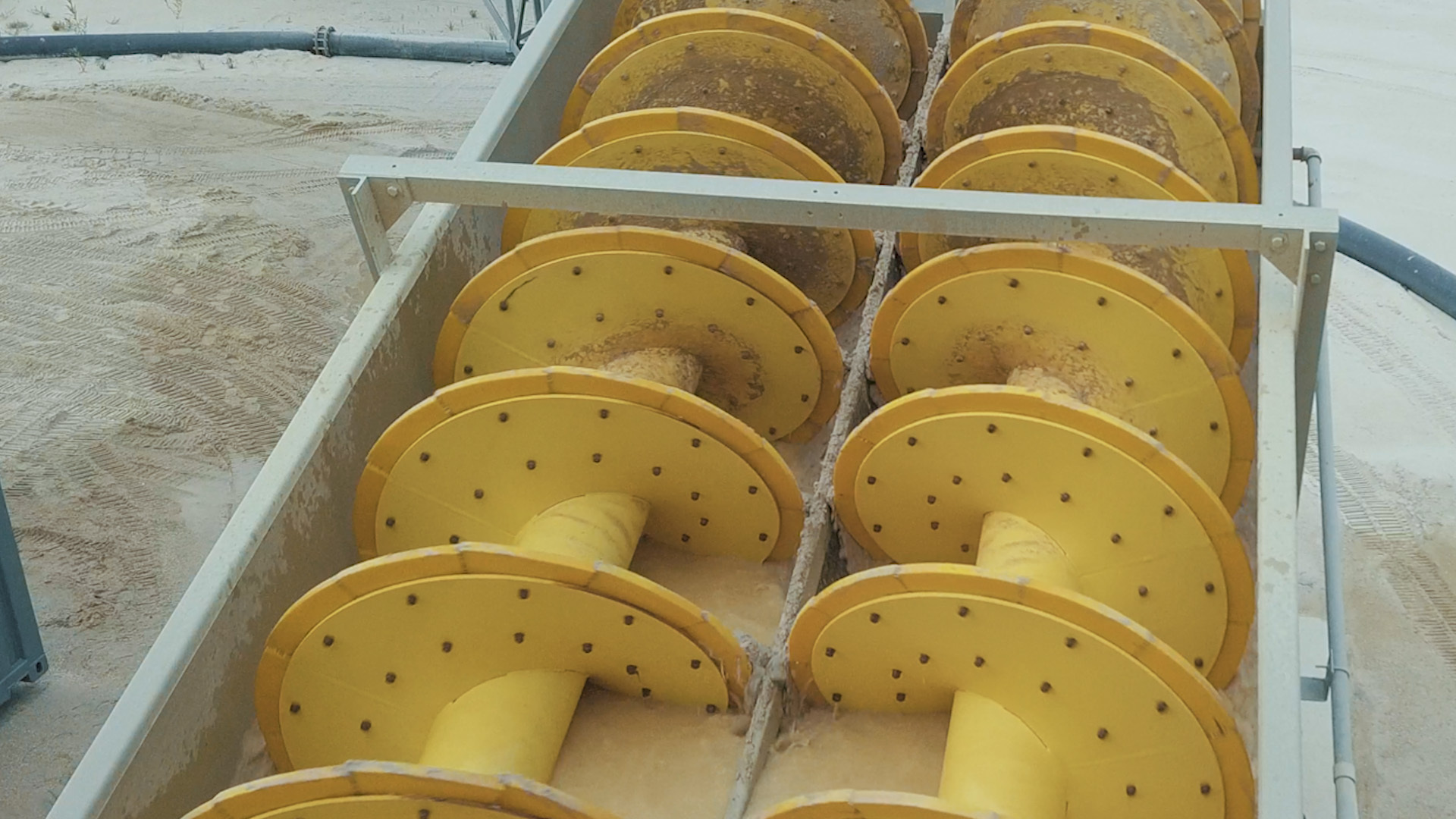
Fine Material Washers provide an energy efficient solution for washing, classifying and dewatering sand using low horsepower. Available in both single and double screw designs, these systems are selected based on the application’s required sand solids capacity and water flow volume. For high volume needs, double shaft units can be built as large as 72” x 38”, delivering capacities up to 950 tph.
To remove moisture, the washer conveys material up an inclined tub, allowing free water to drain before discharge. This process reduces moisture content and results in a drier, more marketable product.
Sand classification is managed by regulating the water flow over the washer box weirs. Keeping all weirs level maintains a low overflow velocity for maximum solids retention. Lowering and offsetting the back weir increases the overflow velocity, enabling excess fines to be washed out of the system.
Falcon Sand Plant
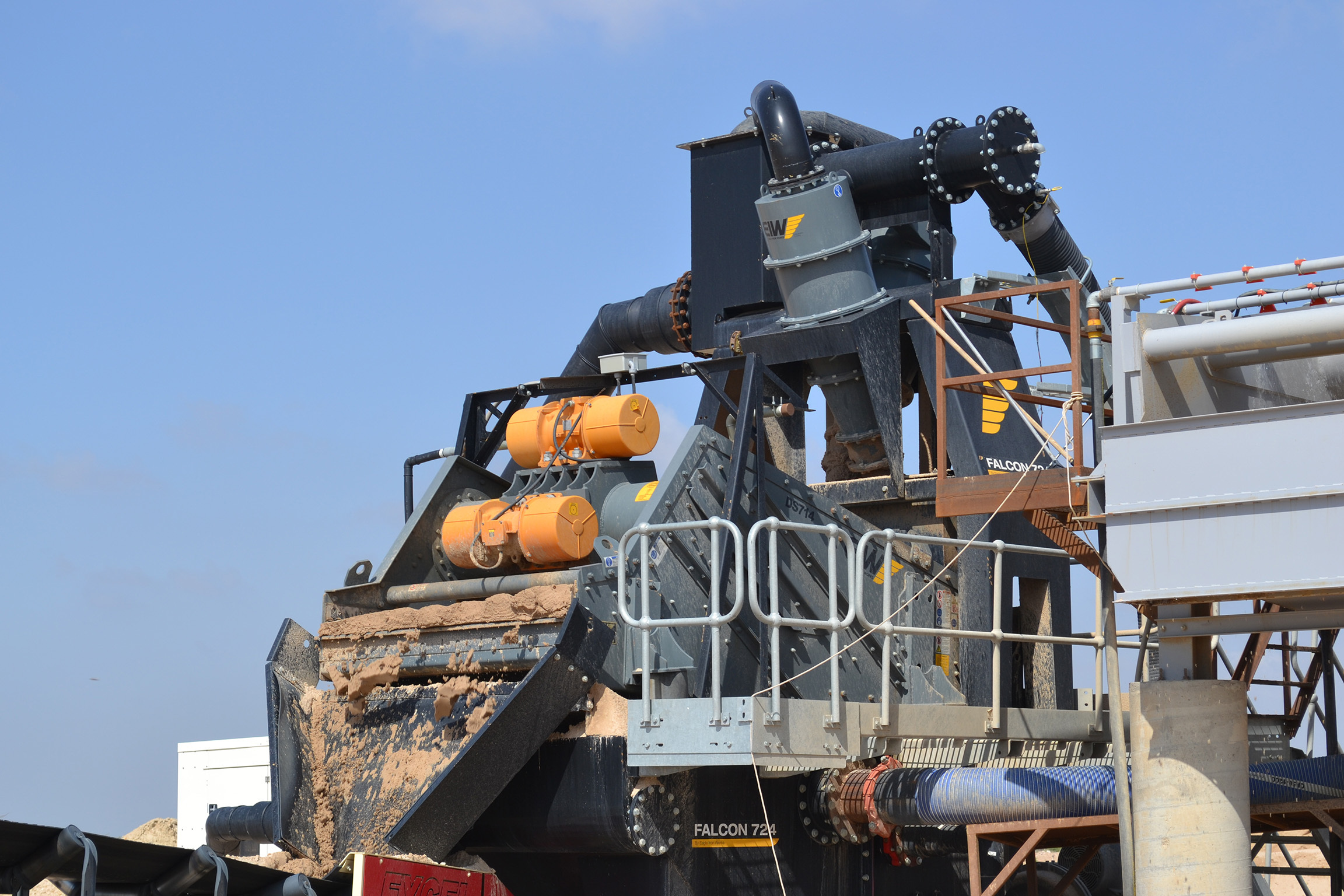
Sand plants, such as Eagle’s Falcon Sand Plant, often comprise of a sump, Pump, Hydrocyclones and a Dewatering Screen. Their rugged construction and straightforward maintenance make these systems well suited for operations seeking high sand recovery and reliable performance.
Processing begins as material enters the sump, where it is pumped into dual Hydrocyclones for classification. Inside the cyclones, the sand is separated to meet required gradations. Specification grade sand exits through the underflow and onto a Dewatering Screen, while the overflow carries away fines and process water. The Dewatering Screen then removes excess moisture, producing a drip free product that can be easily transported, stockpiled and sold immediately. Any water and fine particles captured by the screen are recirculated back into the system, helping maintain consistent product quality throughout operation.
Which Sand Classifier is Right for My Operation?
Selecting the appropriate sand classification equipment is essential for consistently producing an in-spec product. Several variables should be evaluated before making a decision, including desired production capacity, material characteristics, sand feed gradation, slurry water volume, target product specs and how the system will integrate with existing plant components.
For operations that process high volumes of sand and must produce multiple products, a Classifying Tank is often the ideal solution. These tanks precisely separate and blend various sand fractions to maintain a uniform, in spec output. They are particularly advantageous in applications where feed gradation fluctuates, as automated controls continually adjust settings to preserve product quality.
If your primary goal is to remove excessive fines like silt and clay while delivering a low moisture sand, a Fine Material Washer may be the best fit. Common in aggregate washing applications requiring a single, consistent product, the adjustable weirs allow operators to manage overflow velocity and fines retention. When paired with a Dewatering Screen, the system produces a drip free, stackable material ready for immediate handling and sale.
For sites dealing with high-silt or contaminated material, a sand plant configuration like the Falcon offers efficient fines removal and moisture reduction. Hydrocyclones provide accurate classification by separating fine particles from spec grade sand, while the dewatering screen ensures a dry, easily stockpiled final product. This setup is ideal for applications requiring rapid transport and water management, such as frac sand production or dredging operations.
Sand classifiers are essential for maintaining consistent production and achieving high quality product output. When deciding whether to incorporate a sand classifier into your operation, make sure to account for key considerations including capacity and product specifications to ensure your system is optimized for reliable, high quality performance.