Sand Washing 101: Choosing the Right Solution for Your Operation
When it comes to producing high-quality sand, washing is not optional, it’s essential. Whether you’re working in aggregates, mining or specialty sands, your washing process directly impacts product quality, compliance with specifications and overall profitability. With several equipment types available and each designed to perform specific functions, choosing the right solution can feel overwhelming.
This article breaks down the fundamentals of sand washing and helps you determine which solution best aligns with your operation.
Why Sand Washing Matters
Sand often contains undesirable materials such as clay, silt, dust and lightweight contaminants. If left untreated, these impurities can negatively affect:
- Concrete strength and durability
- Asphalt performance
- Product consistency
- Customer satisfaction
Proper washing often improves product quality and helps ensure sand meets required gradation and cleanliness standards. Just as importantly, a well-designed system preserves valuable material rather than washing it away.
Key Factors to Consider Before Choosing Equipment
Before selecting a washing solution, evaluate these critical aspects of your operation:
1. Feed Material Characteristics
The composition of your raw material, especially clay content and gradation, plays a major role in equipment selection. Heavy clay or sticky materials require more aggressive scrubbing, while other sand may only need classification and dewatering.
2. Required End Product Specs
Different markets demand different gradations. Your washing system must help you consistently meet these specifications.
3. Water Management
Washing systems rely heavily on water. Consider water availability, recycling requirements and environmental regulations when choosing equipment.
4. Production Volume
High-capacity operations require durable, continuous-duty equipment that can process large volumes without sacrificing efficiency.
Comparing Common Sand Washing Solutions
Sand Screws (Fine Material Washers)
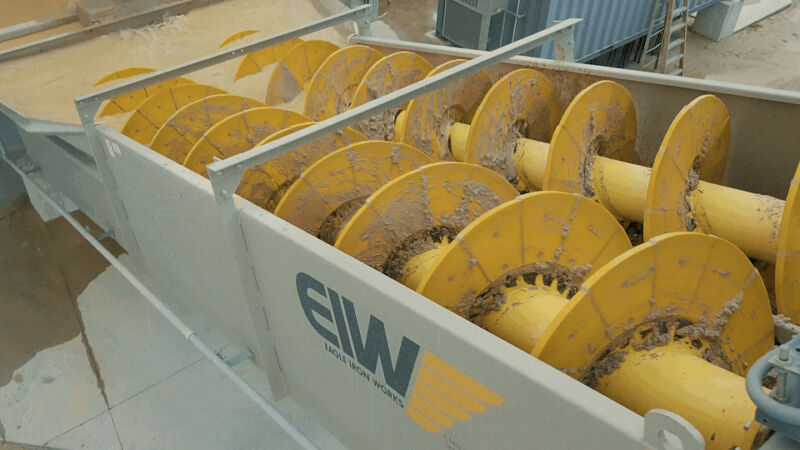
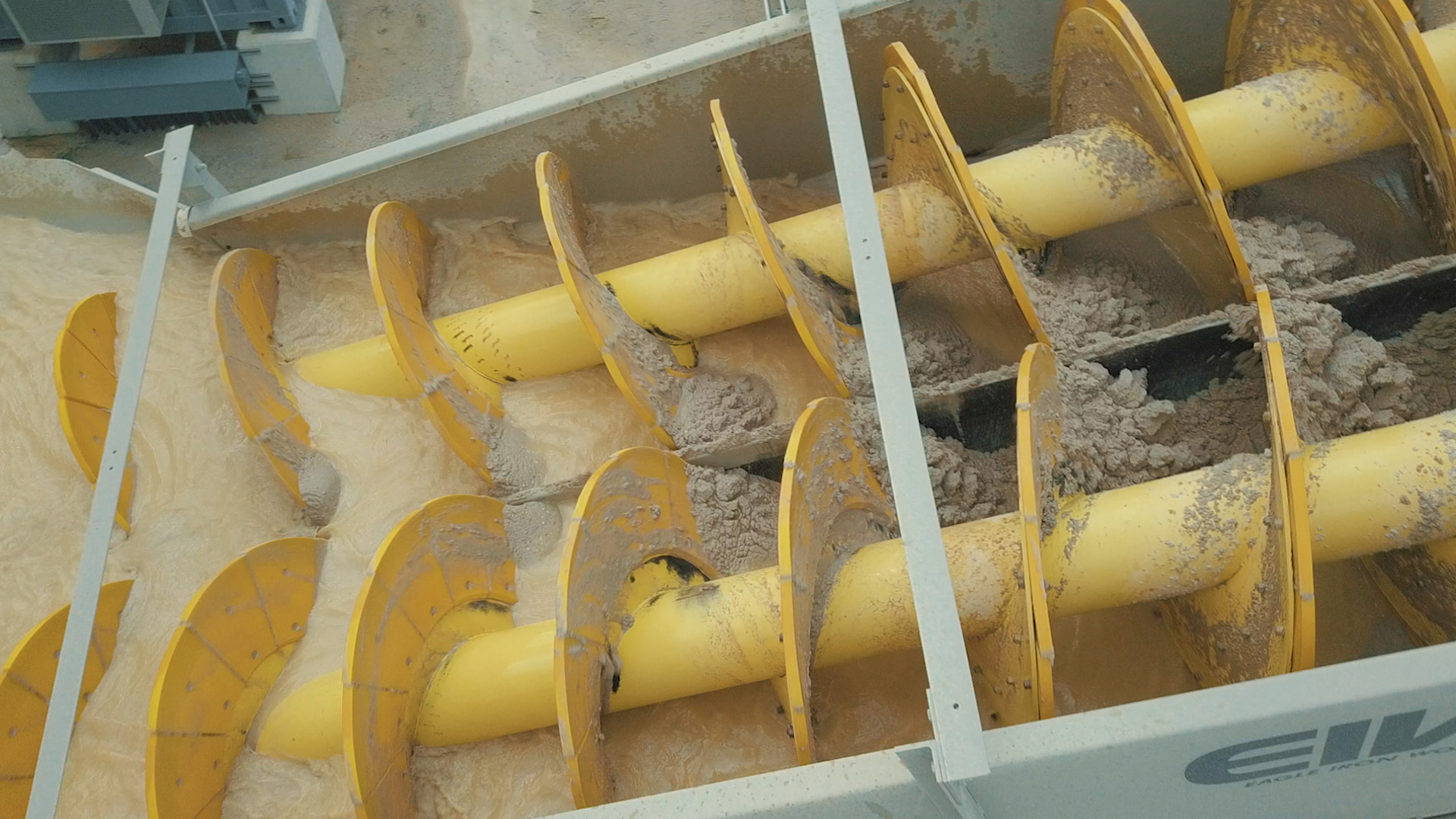
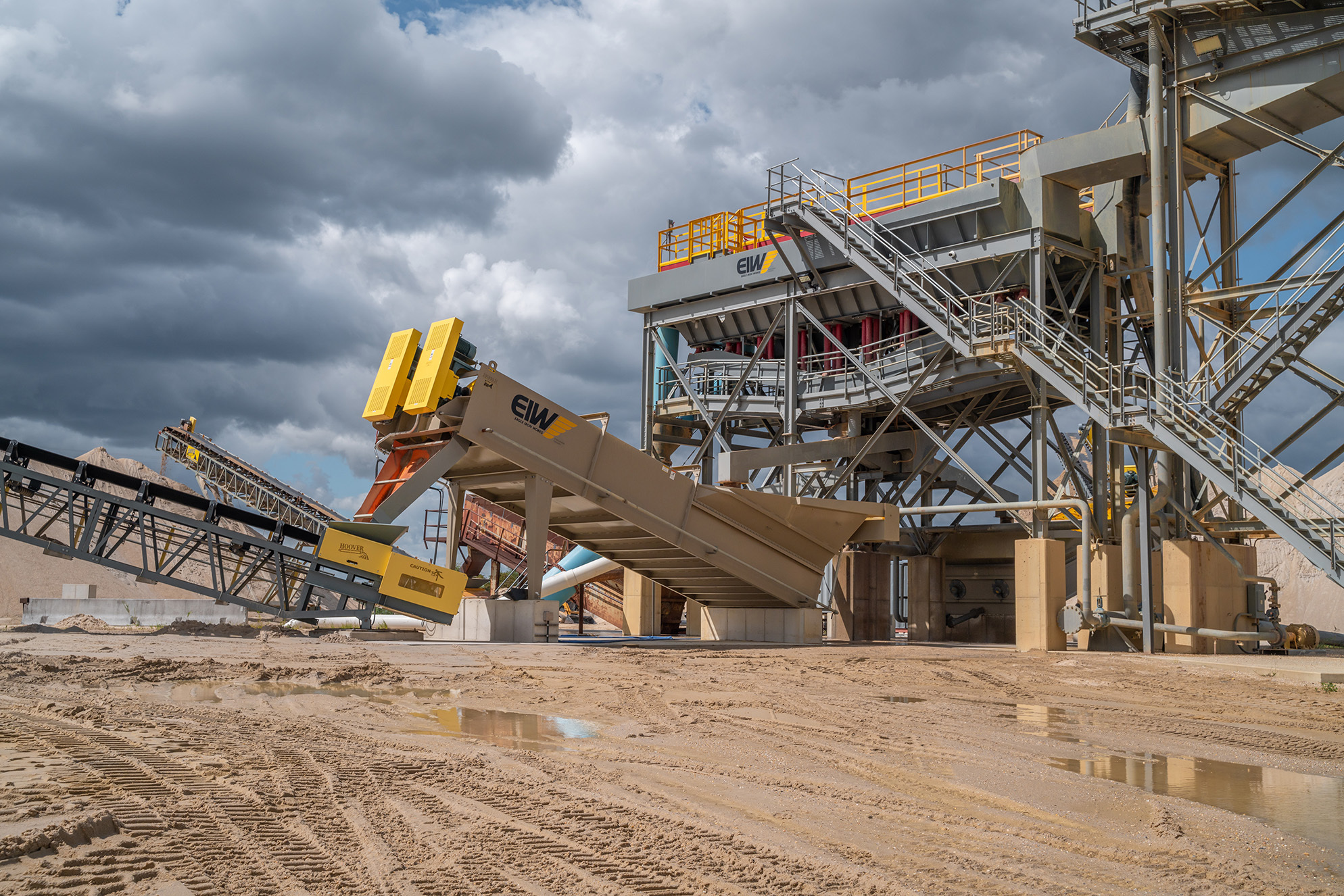
Sand screws are one of the most widely used washing solutions. They use a rotating screw shaft to convey material up an inclined box, drying the material and leaving water and fines behind to overflow the discharge weirs at the back of the box.
Best for:
- Simple washing and dewatering
- Removing light contaminants (silt and clay)
- Operations with consistent feed material
- High capacities above 300 TPH
Advantages:
- Cost-effective
- Easy to operate and maintain
- Provides some dewatering capability
- Very low HP/kW requirements per ton per hour of production
Limitations:
- Limited control over cut points (less precise classification)
- Potential loss of fine material if not properly sized
Sand screws are a solid choice for straightforward applications but may not provide the precision needed for more demanding spec sand.
Fine Material Washers with Cyclones
Cyclone-based systems use centrifugal force to separate fine particles from water.
Best for:
- Recovering fine sand that might be lost
- Tight control of product gradation
- Where a sand feed has more than 12% passing 200 mesh/0.075 mm
Advantages:
- Improved material recovery
- Reduced waste
- More precise classification
Limitations:
- Higher upfront investment
- More complex operation
If your operation values efficiency and maximizing yield, a hydrocyclone/fine material washer system can offer a more advanced solution than a standalone screw.
Classifying Tanks
Classifying tanks use a controlled upward flow of water to separate particles by size and weight, allowing finer particles to overflow while coarser, heavier sand settles varying sizes down the length of the tanks before being discharged and blended as needed.
Best for:
- Precise classification and multiple sand products
- High-end markets requiring strict gradation
Advantages:
- Good control over coarse and medium particle size separation
- Ability to produce multiple products simultaneously
- Controlled production for most construction sand specifications
Limitations:
- Requires careful calibration and monitoring
- Higher water demand
Classifying tanks are ideal when product consistency and customization are top priorities.
Attrition and Scrubbing Equipment
When sand contains clay coatings or deleterious soft material, washing alone sometimes is not enough. Sand scrubbing equipment, such as an attrition scrubber, is used to break apart these contaminants.
Best for:
- Hard clay particles contaminating sand
- Upgrade sand equivalency and durability ratings
- Disintegration of Lignite
- Removal of stains and coatings
Advantages:
- Aggressive cleaning
- Improves downstream washing efficiency
Limitations:
- Additional equipment cost
- Higher wear and energy use
These systems are often used in conjunction with sand washing equipment to improve overall results.
Matching the Solution to Your Operation
Choosing the right sand washing system isn’t about picking one piece of equipment, it’s about designing a process. In many cases, the most effective solution combines multiple technologies.
Here are a few common scenarios:
- Basic sand production: A sand screw may be sufficient for washing and dewatering.
- Tight-spec concrete sand: A cyclone system or classifying tank provides tighter control.
- High clay content feed: Add scrubbing equipment before classification.
- Maximizing yield: Incorporate fine material recovery systems to capture valuable product.
The Role of Quality Control
No matter which equipment you choose, maintaining consistent quality is key. Regular sampling, monitoring of gradation and adjusting operating parameters are essential to ensure your system continues to meet requirements.
Washing systems often include automation and control features that make it easier to maintain consistent production.
There is no one-size-fits-all solution in sand washing. The right equipment depends on your raw material, production goals and end-market requirements.
By understanding the strengths and limitations of each option, you can build a washing system that improves product quality, reduces waste and maximizes profitability.