
Maximizing Efficiency with Blade Mills: When and Why to Use Them in Your Wash Plant
Today’s wash plants face growing pressure to improve performance while operating with tighter constraints. As material specifications tighten and production demands increase, operators are challenged to maintain consistent quality while pushing higher throughput. Inefficiencies in washing, scrubbing and sizing can quickly limit overall plant performance.
Blade Mills can offer a practical solution to many of these challenges. By combining washing and scrubbing, similar to a Rotary Scrubber (or Barrel Washer), this compact unit offers a streamlined approach to material processing that can help improve a plant’s efficiency. Their aggressive yet controlled action makes them especially effective for producing cleaner material without sacrificing fines as a result.
In this blog, we’ll explore where Blade Mills fit into a wash plant and why they can be a useful tool in improving product quality and operational efficiency.
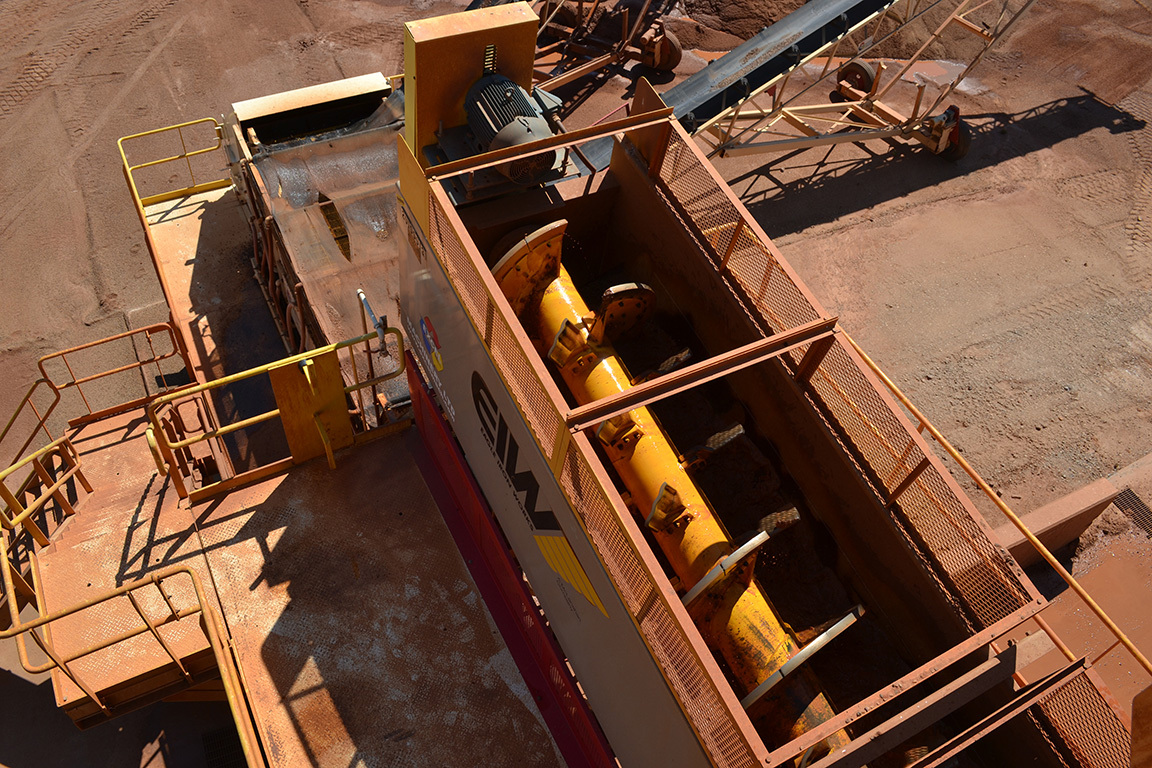
What Is a Blade Mill?
Blade Mills are typically used in applications where contaminated material needs to be scrubbed before further processing by downstream equipment. They are most often used ahead of wash screens or other wash equipment to improve screening efficiency or sand equivalency.
Installed at a shallow angle, Blade Mills convey material with continuous agitation, discharging solids and water at the opposite end of the incoming feed to a 65% to 75% solids slurry. Blade Mills process this material by using alternating paddles and screw flights to scour and abrade deleterious material, loosening coatings and clay while separating unwanted fines.
Traditional washing equipment such as Log Washers and Coarse Material Washers are used to wash rock that can’t be sufficiently cleaned for concrete/paving by a wet washing vibrating screen. On the other hand, Blade Mills can be used to wash and precondition an all-in, top size-controlled rock and sand feed with water.
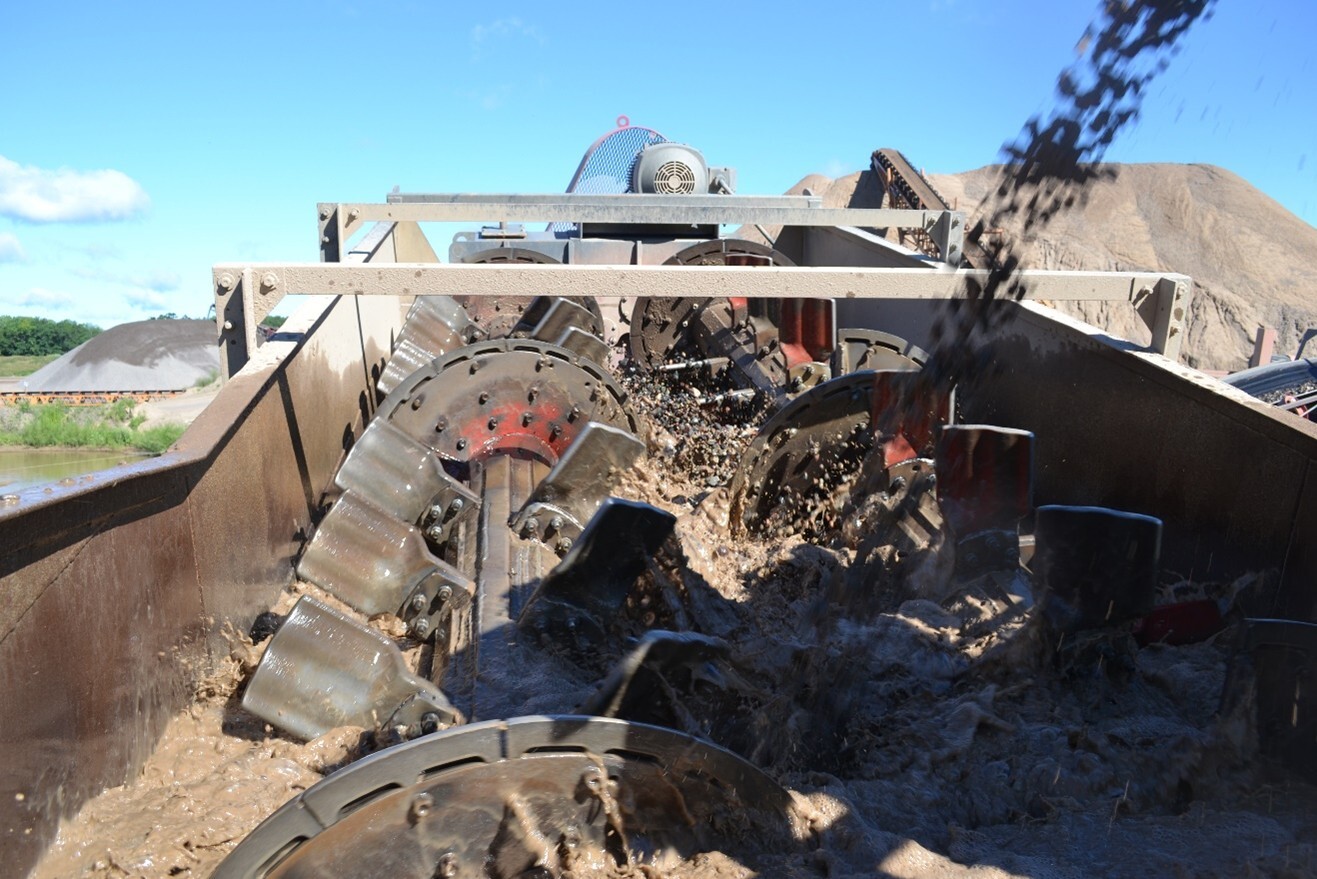
Although Blade Mills are very similar in appearance to Coarse Material Washers, they function much differently. The main difference between the two is that any material and water that enters the Blade Mill must exit through the discharge opening. Blade Mills are also installed at a slope of zero to five degrees whereas Coarse Material Washers are typically installed at 15 degrees.
The Role of Blade Mills in a Wash Plant
In a typical process flow, Blade Mills are utilized before a wet washing screen where rock and sand are separated and further processed, especially sand that may need to be classified and/or dewatered. Depending on the application, Blade Mills are used in rock-only or sand-only circuits.
Blade Mills typically process rock, gravel, limestone and alluvial, silica or manufactured (crushed) sand along with any combination of these. They can also be used to process hard ores that cannot be sufficiently cleaned on a wet washing vibrating screen. Blade Mills are typically used to scrub 2” or 3” (50mm or 75mm) minus material to prepare for downstream processing with a Fine Material Washer or Classifying Tank.
When to Use a Blade Mill
When considering equipment selection for your operation, a Blade Mill may be the best choice if you have a feed material with agglomerates or contaminants that need to be removed. Blade Mills are also suitable for feeds with water-soluble clay or sticky material content as the alternating paddles and flights scour and break down this material. Blade Mills can also be the right fit when operations need aggressive scrubbing without the excessive loss of fines.
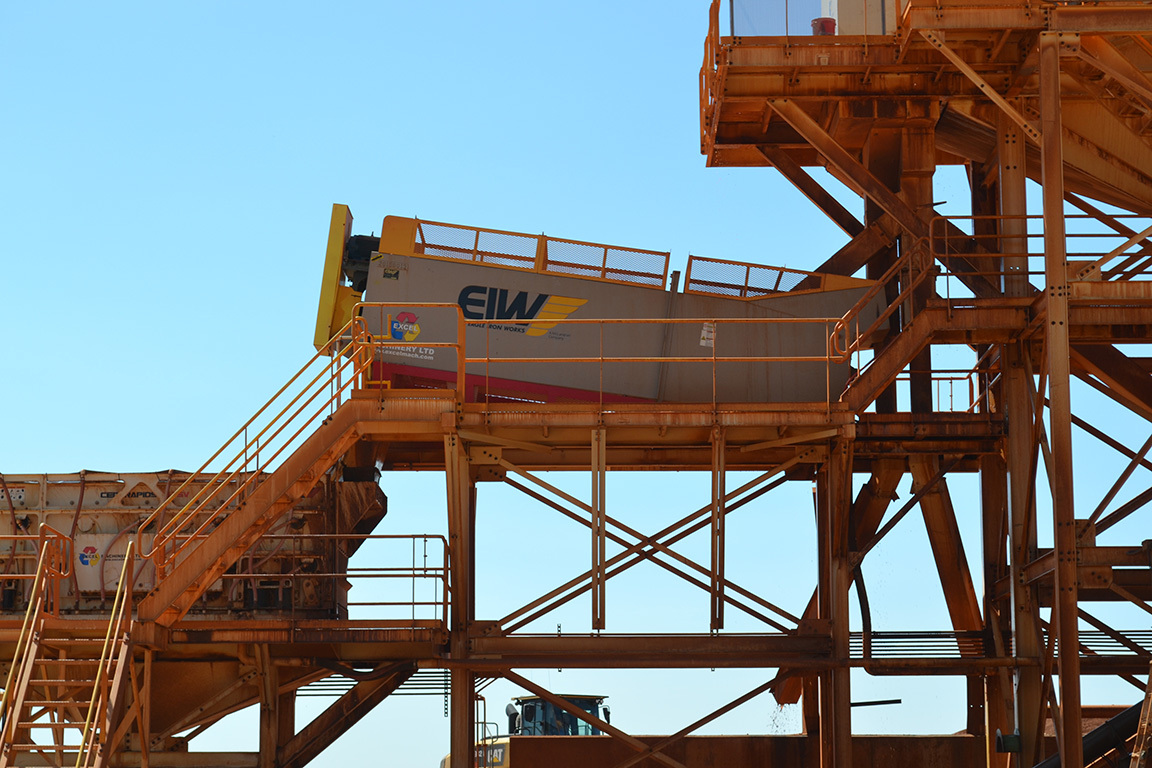
Blade Mills are used for most any rock (top size controlled) and/or sand feed that can’t be cleaned or washed sufficiently with a wet screen, single stage sand screw or cyclone/dewatering plant. They are ideal for scouring, breaking down and removing water-soluble clays from coarse rock and sand feeds.
Although Blade Mills are an efficient way to scrub material, they are not suitable for all applications. Other equipment with more aggressive scrubbing capabilities includes Log Washers, Coarse Material Washers, Attrition Scrubbers and more.
Operations that are dealing with tough, plastic, fine grained sticky clay contaminants in a rock feed should utilize a Log Washer instead of a Blade Mill for more aggressive scrubbing. However, if your material is contaminated with light-to-medium clay, a Blade Mill is a lower-cost and lower-power solution.
To determine if a Blade Mill is the right fit for your operation, it is important to test your material and evaluate your process. A soak test can help indicate the severity of scrubbing your material requires by determining if contaminants are water-soluble. While Eagle Iron Works offers in-house testing to ensure the best equipment selection and sizing for your unique application, running your own soak test on fresh material from your pit is often best.
Why Blade Mills Improve Efficiency
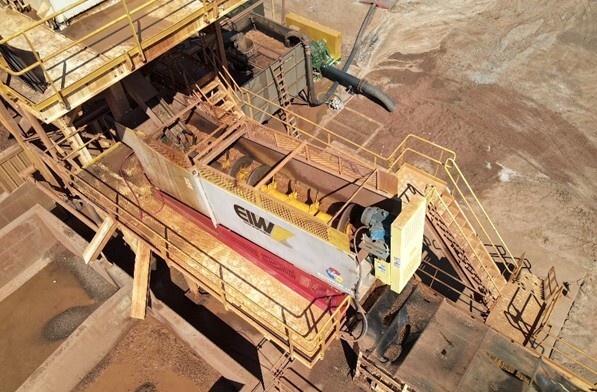
Blade Mills improve processing efficiency by delivering higher material cleanliness in a single stage process, reducing the need for additional washing or scrubbing stages. Their controlled, low-intensity attrition action effectively liberates soluble clays, coatings and light contaminants, allowing producers to achieve target cleanliness earlier in their process.
Because Blade Mills can be used instead of a multi-stage scrubbing process, they allow producers to simplify plant design and operation. This can mean lower capital costs and reduced energy consumption. This streamlined approach also leads to improved downstream performance as cleaner material allows screens and classifiers to operate more effectively.
Additionally, Blade Mills contribute to operational efficiency through reduced maintenance and wear. Because of their shallow installation slope compared to other scrubbing equipment, liners, blades and bearings face less extreme forces which helps to extend wear life and reduce downtime.
Operational Considerations
When sizing a Blade Mill for your application, it is important to consider the type of clay contamination, the size of the rock/ore feed, the feed solids capacity and processing flow of your plant.
EIW Blade Mills are available in several sizes, having capacities ranging from 70 tph to 770 tph. These units are single- or double-shafted machines, depending on capacity requirements. Additional paddles can be added to a Blade Mill for more aggressive scrubbing, but the capacity of the machine will be reduced.