
It All Comes Out in the Wash: Exploring and Comparing Aggregate Scrubbing Options
Every day, aggregate producers work with a wide range of materials from gravel, limestone, and granite to sandstone and the many types of sand (such as manufactured, alluvial, and silica sand) used in industrial and fracking applications. Each material comes with its own challenges, and the way producers create in-spec rock and sand products often depends heavily on the feed source.
Understanding what comes out of the ground is the first step in developing a process flow and selecting the right equipment for your operation. Aggregate reserves vary widely. They can be removed from limestone and granite deposits in quarries or found below the water table in bank run and alluvial deposits, which require suction or grab dredge operations. These different types of sources play a large role in determining what kind of washing, sizing, and classifying processes are necessary.
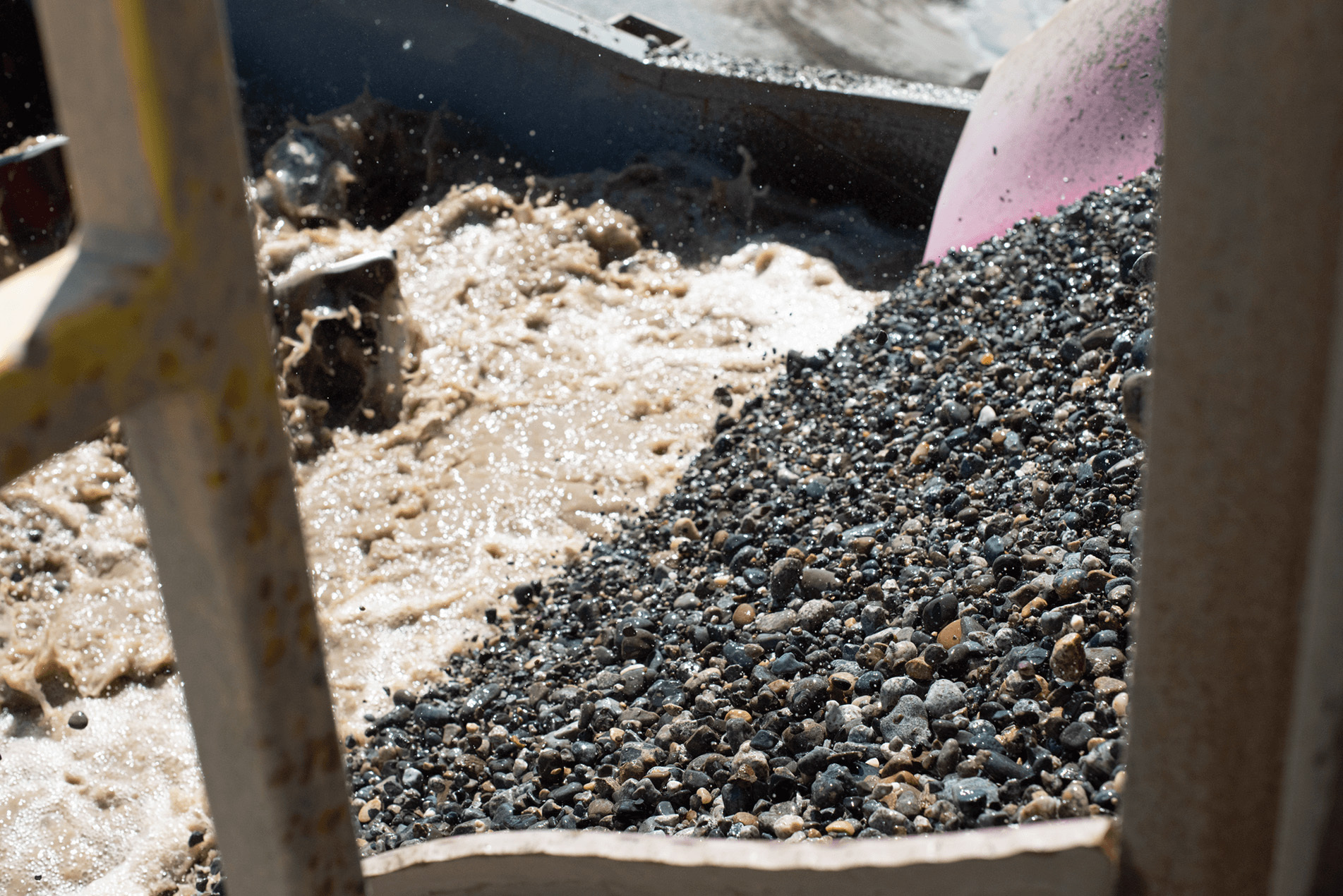
In many cases to produce clean rock, a simple washing/vibrating screen may not be enough to achieve clean material. To determine the best way to remove severe contaminants like clay or mud, evaluations such as an overnight soaking test can determine whether the problem is a plastic clay that remains intact or a soluble mud that breaks down in water. The results of this test help identify which coarse material washing equipment, whether a log washer, blade mill, coarse material washer, wash screen, or rotary scrubber, is best suited to handle the feed and deliver the quality material your operation requires.
This blog will dive deeper into the capabilities and key features of each piece of equipment to help operators determine which piece of equipment would be the best fit for their site.
Coarse Material Washers
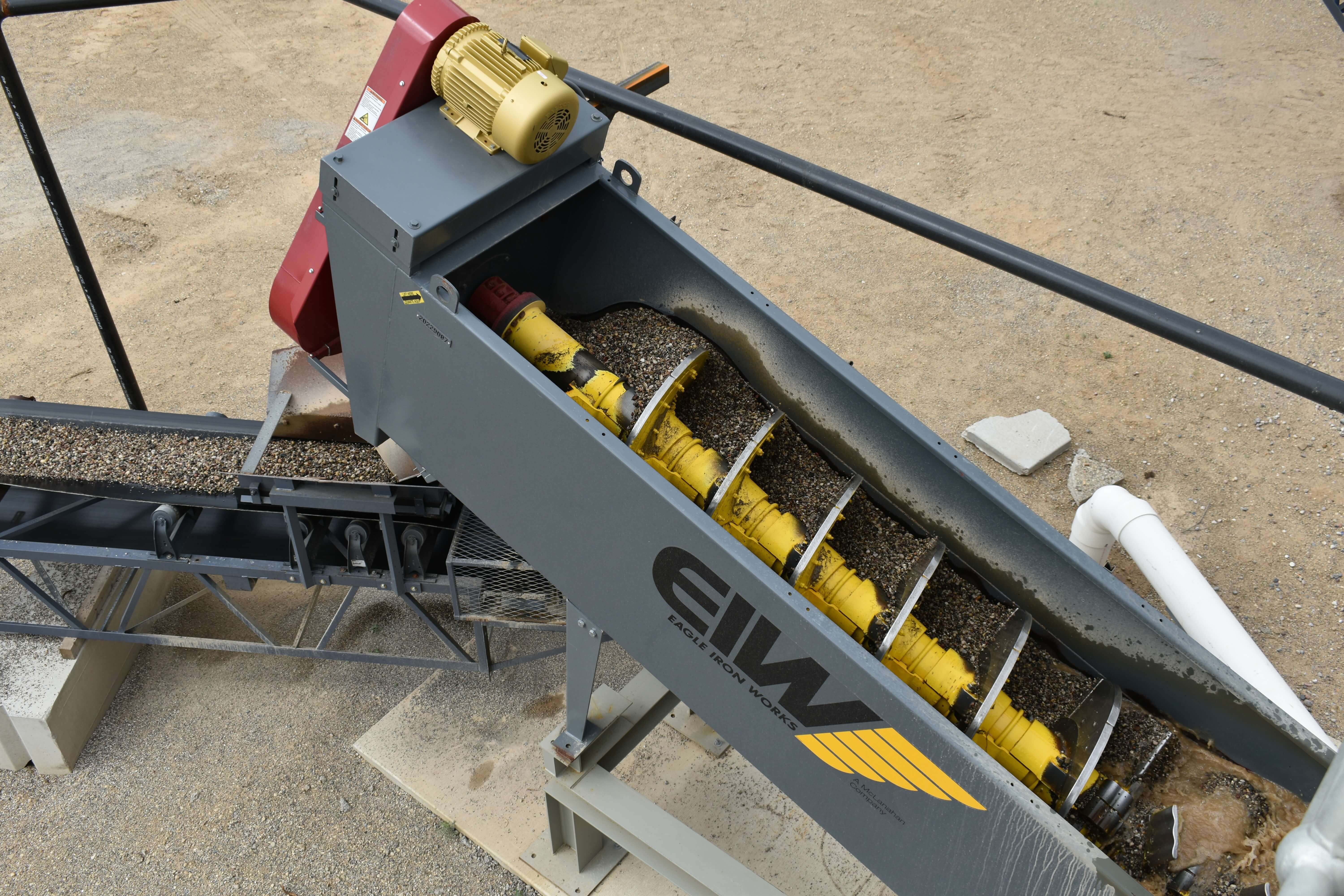
Coarse Material Washers provide light scrubbing for removing soluble clays, crusher fines and dust, or floatable (non-water-logged) debris such as sticks, roots and sometimes even coal. The shafts on these machines use varying combinations of spiral flights and paddles to provide scrubbing action. Coarse Material Washers are typically installed at a 15-degree slope.
When to Use a Coarse Material Washer
To determine if a Coarse Material Washer is the right piece of equipment for your operation, it is important to first determine the maximum size and tonnage. Coarse Material Washers can accept a maximum top feed size of two to three inches.
It is often recommended that the material to be processed is tested for plasticity and clay content in a wash or soak test. A soak test is performed by placing material in a container of water to determine the amount of scrubbing needed to produce a clean product.
Based on the desired level of scrubbing, additional paddles may be required to provide more scrubbing and/or jigging action to remove sticks and trash. Adding paddles to the Coarse Material Washer shaft causes some reduction in capacity. Typically, using more than six sets (twelve paddles) will reduce capacity, and the motor HP should be increased by one-third to account for this change.
Key Features
Eagle Iron Works offers two versions of Coarse Material Washers – the Classic and CONDOR series. CONDOR machines utilize a Dodge TA II Series shaft mount reducer rather than the Classic Eagle gear box. CONDOR screw washers offer a lower cost option while using the same wear parts and outboard bearing assembly as EIW Classic units.
Eagle armor iron alloy paddles have corrugated surfaces for maximum scrubbing. These paddles can also provide a jigging action to float up non-water-logged sticks, roots and lightweight coals to be flushed over by the rising current and flowed over a weir.
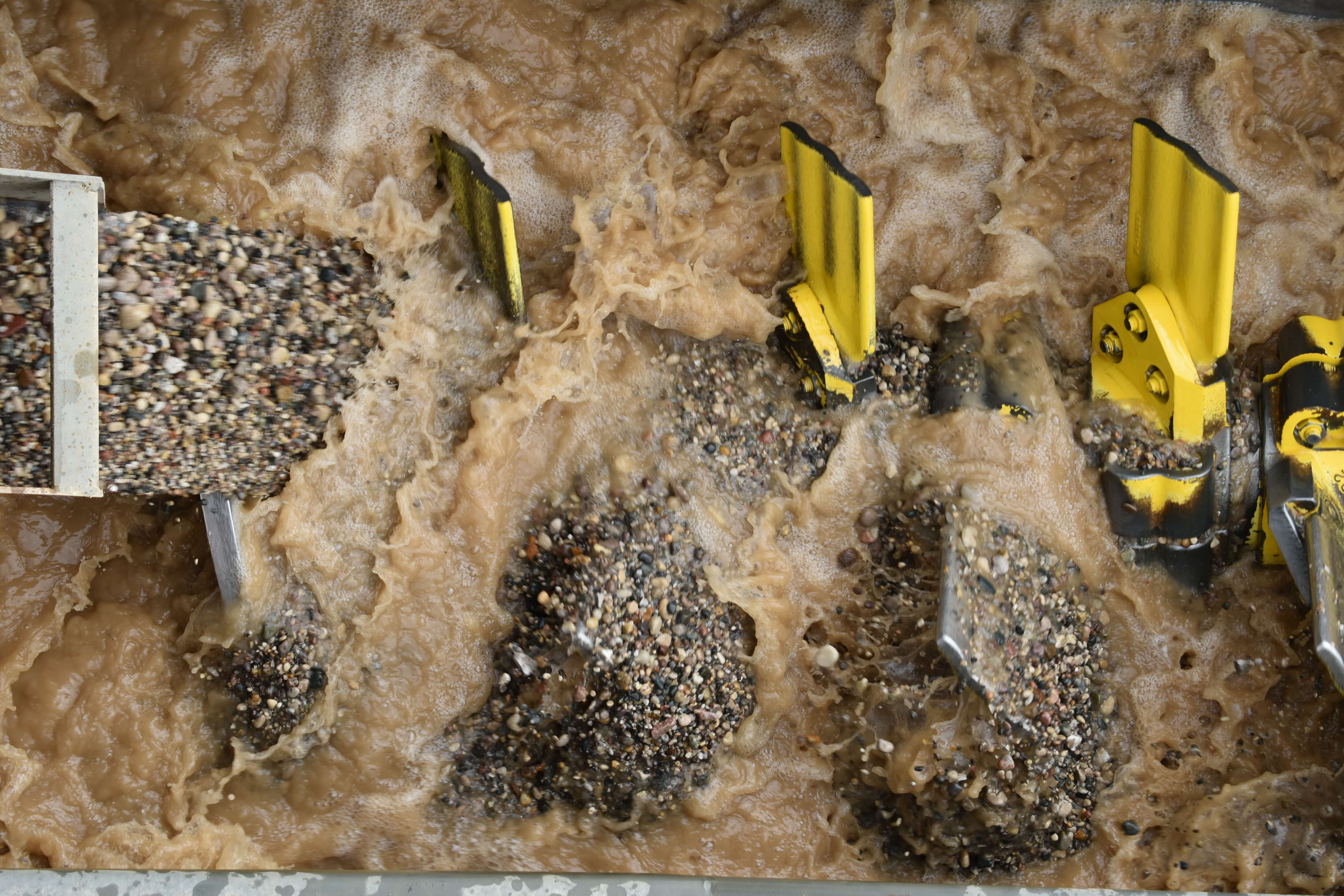
The rising current water manifold provides an upward current to flush out unwanted dissolved silts and soluble clays.
Trash Removal Using a Coarse Material Washer
In addition to their use in washing aggregate materials, Coarse Material Washers can be used to remove trash and unwanted materials such as non-water-logged sticks, roots and coal from a product stream. For standard applications, it is recommended that the feed enters towards the conveying side of the Coarse Material Washer shaft. For trash removal and floating off debris, the feed needs to counter flow against the advancing spirals and paddles. An adjustable trash removal weir is provided to fine tune the retention of the rock and removal of the lightweight deleterious material.
Installing six sets (twelve paddles) will raise the water level in the settling tub for a trash removal setup. It is important to add plenty of water for this process. It is also recommended to use a wash screen following any Coarse Material Washer to remove any residual slimy films.
Blade Mills
Blade Mills are a piece of equipment similar to Coarse Material Washers; however, they are not installed at such a steep slope. Coarse Material Washers are typically installed at 15 degrees, whereas Blade Mills are installed between zero and five degrees. Using a slope greater than five degrees results in a rear overflow, while a slope less than five degrees will have no overflow. Blade Mills typically take a rock and sand feed and scrub material for downstream processing and are typically used to scrub 2” or 3” minus material.
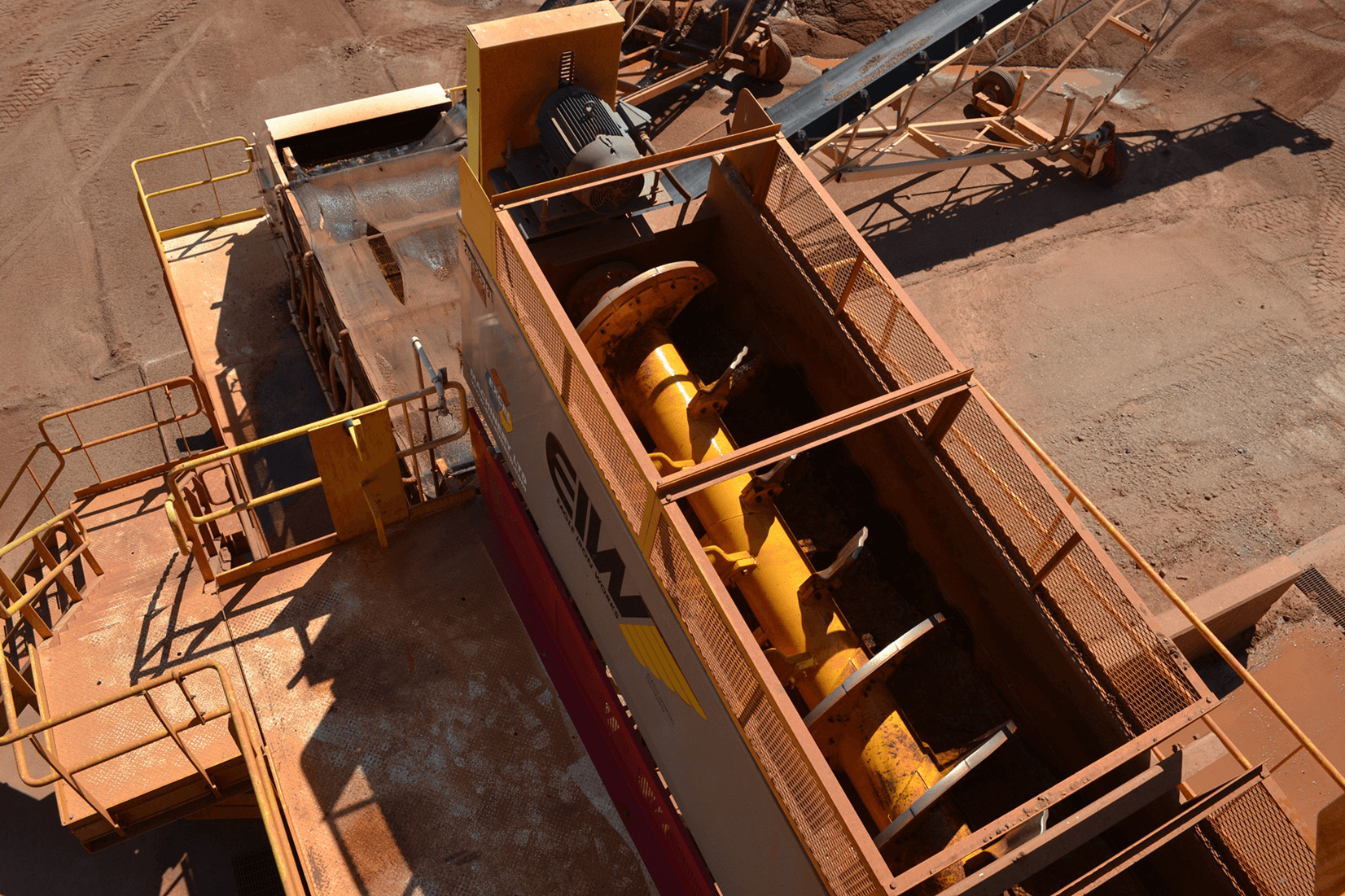
Blade Mills accept dry feed from a conveyor and typically discharge onto a wash screen for further processing with a Fine Material Washer or Classifying Tank. It is recommended that the material is fed in front of the first flight so that there is no buildup or wear on the flanged section where the stub shaft bolts to the flange of the Blade Mill shaft. Water is added through the rising current manifold and discharged along with the product.
Benefits of Blade Mills
There are many benefits to using a Blade Mill for pre-scrubbing raw feeds that contain a high silt content. Blade Mills sometimes increase sand equivalency levels as well as screening efficiency. They also have capacities up to 35% to 50% greater than the standard Coarse Material Washer. The reversing paddles of a Blade Mill increase retention time but can reduce capacity.
Sol-Clay Washers
Sol-Clay Washers are medium-duty twin-shaft rock washers meant to handle stubborn soluble clays and crusher fines. They have scrubbing capabilities in between Coarse Material Washers and Log Washers and are intended to remove water soluble material from rock feeds. For the economical minded producer, a Sol-Clay Washer is more budget-friendly while still doing a good job of scrubbing rock with clay contaminants in many instances.
Key Features of Sol-Clay Washers
The extended tub length of Sol-Clay Washers provides ample room for both scrubbing and dewatering. Material is moved toward the discharge opening by intermeshing paddles, ensuring continuous agitation. For the best results, these washers are operated with low water volume and low pool level, which maximizes the scrubbing action needed to break down clay.
Another key feature of Sol-Clay Washers is their ability to handle aggregate material up to 2–2.5 inches in size, depending on the machine’s size. Larger diameter paddle shafts can process bigger rock and achieve higher tonnage per hour compared to smaller units.
It’s important to note that larger Sol-Clay Washers come with increased operational demands. More power is needed to turn the larger shafts, and additional water is required to properly wash the material.
Log Washers
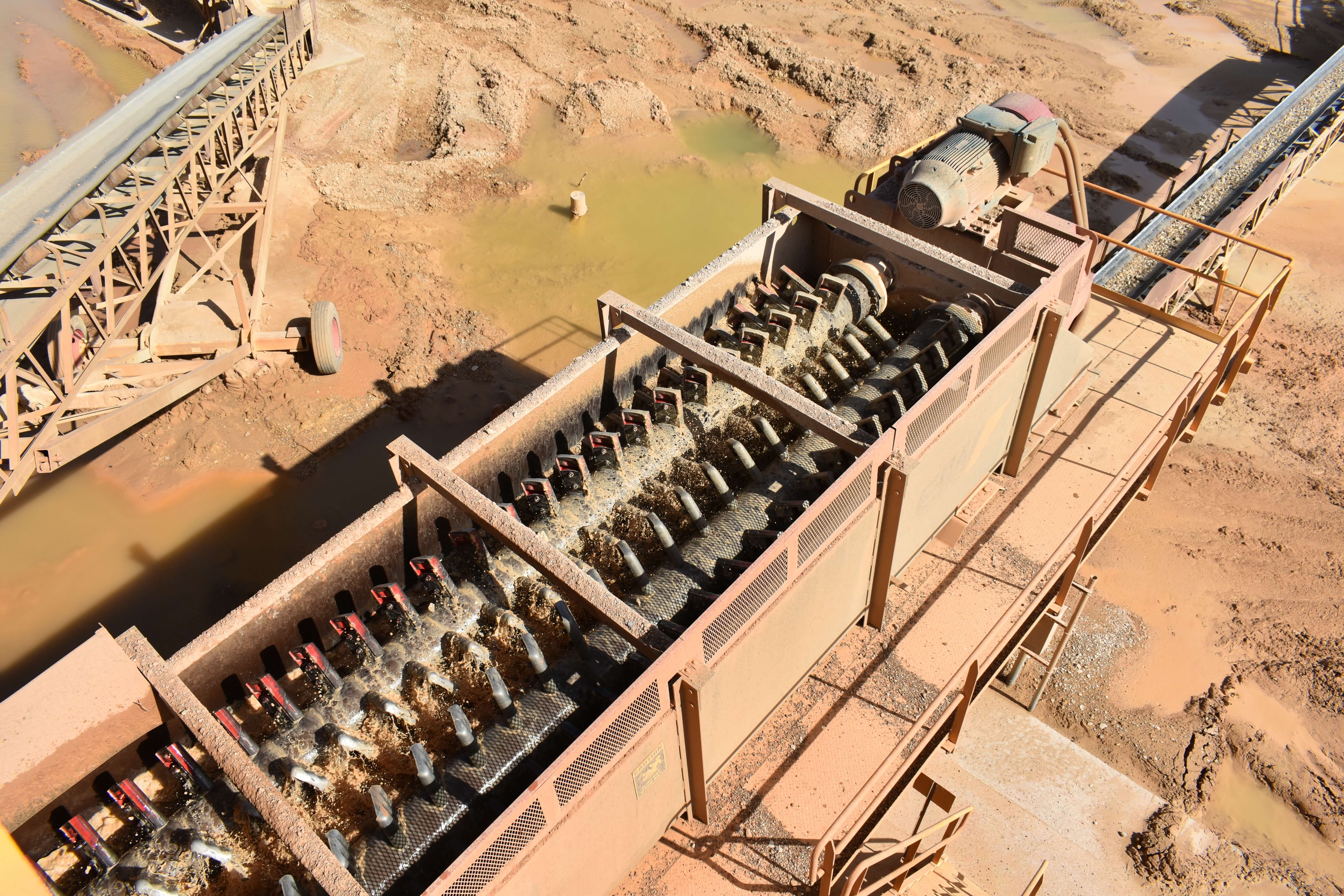
Log Washers are heavy-duty twin-shaft rock washers used to scrub gravel and stone. Out of all aggregate washing and scrubbing equipment, they provide the most vigorous scrubbing and can handle plastic/oily clays, insoluble clays, some cemented stones, soft stones and conglomerates.
Key Features of Log Washers
Log Washers utilize intermeshing paddle shafts to maximize rock on rock scrubbing. Long shaft lengths of 30’-35’ provide extended retention times to ensure the removal of deleterious materials.
The water manifold in the washer tub helps to flush out deleterious materials once they are scrubbed from the material. To achieve this, water is injected into perforated sections of the manifold to provide an uplifting current of water to overflow dissolved clays from the rock.
The oversized paddles of the Log Washer play a big role in the powerful scrubbing capabilities of the machine. The wraparound paddle design protects the paddle base to which the paddle is bolted. The one-piece paddles work well with large sized feed up to four inches cubed. On the other hand, the two-piece paddles provide an economical replacement option.vvvv
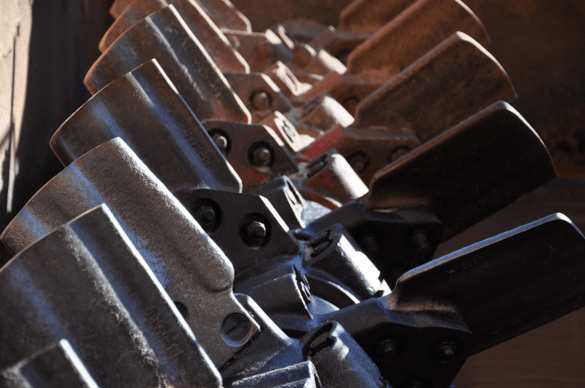
It is recommended to use a rinsing screen after a Log Washer to rinse off clay slimes that remain on the rock. Usually, minimal water (est. 2-3 gpm per tph) is required for the final rinsing.
How to Choose a Sol-Clay Washer vs. Log Washer
Sol-Clay Washers and Log Washers are typically selected following a lab soak test. Sol-Clay Washers use approximately half the HP per ton of material handled than is used by a Log Washer. Pre-screening is vital for keeping out oversized materials.
Determining your contaminant is vital for choosing the most cost-effective and efficient solutions for your coarse aggregate production. While this acts as a starting point for your consideration, Eagle Iron Works’ team of experts and their dealer network can help assess your material needs and determine which piece of equipment would be the best fit for your operation.